Interactive Read Aloud for We Are Grateful Otsaliheliga: Comprehension Unit

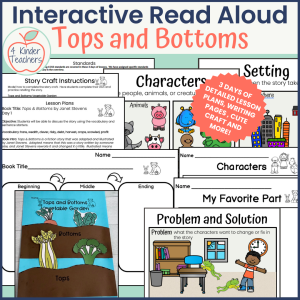
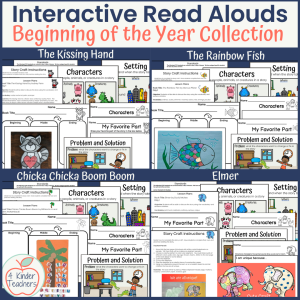
Bring “We Are Grateful: Otsaliheliga” to life with this engaging 3-day Interactive Read Aloud Resource! Each day includes detailed lesson plans with book introductions, text-dependent questions, vocabulary, and activities aligned with Common Core standards. Complete with differentiated writing pages, story elements anchor charts, and a cute craft, this resource is research-based, Science of Reading-aligned, and easy for teachers to implement.

$3.00

Interactive Read ...

Loading...

Standards

CCRA.R.1, CCRA.R.2, CCRA.R.3, RL.K.1, RL.K.2, RL.K.3, RL.K.4, RL.K.5, RL.K.6, RL.K.7, RL.K.10, SL.K.1, SL.K.1a, W.K.1, W.K.3

Formats

PDF

Pages

41

Description

Make your read aloud come alive with this 3 day Interactive Read Aloud Resource for the book We Are Grateful Otsaliheliga!

This resource comes complete with:

  • 3 days of detailed lesson plans with book introductions, text dependent questions, vocabulary, and common core standards
  • 14 differentiated writing pages
  • Story elements anchor charts
  • Cute and fun craft to decorate your classroom or send home to showcase student work

This resource aligns with the science of reading. It is research based, easy to implement and aligned with the common core standards.

Reviews

There are no reviews yet.

Be the first to review “Interactive Read Aloud for We Are Grateful Otsaliheliga: Comprehension Unit”

Your email address will not be published. Required fields are marked *

Standards

With prompting and support, ask and answer questions about key details in a text.
 
With prompting and support, retell familiar stories, including key details.
 
With prompting and support, identify characters, settings, and major events in a story.
 
Ask and answer questions about unknown words in a text.
 
Recognize common types of texts (e.g., storybooks, poems).
 
With prompting and support, name the author and illustrator of a story and define the role of each in telling the story.
 
With prompting and support, describe the relationship between illustrations and the story in which they appear (e.g., what moment in a story an illustration depicts).
 
Actively engage in group reading activities with purpose and understanding.
 
Use a combination of drawing, dictating, and writing to compose opinion pieces in which they tell a reader the topic or the name of the book they are writing about and state an opinion or preference about the topic or book (e.g., My favorite book is…).
 
Use a combination of drawing, dictating, and writing to narrate a single event or several loosely linked events, tell about the events in the order in which they occurred, and provide a reaction to what happened.
 
Participate in collaborative conversations with diverse partners about kindergarten topics and texts with peers and adults in small and larger groups.
 
Follow agreed-upon rules for discussions (e.g., listening to others and taking turns speaking about the topics and texts under discussion).
 
Read closely to determine what the text says explicitly and to make logical inferences from it; cite specific textual evidence when writing or speaking to support conclusions drawn from the text.
 
Determine central ideas or themes of a text and analyze their development; summarize the key supporting details and ideas.
 
Analyze how and why individuals, events, and ideas develop and interact over the course of a text.